Article Revenue management
How to increase your occupancy rate in the low season
11 min read
No result. Try another word, or request a demo.




The Reservit suite
Country and language
All other countries
Reservit 3 min read
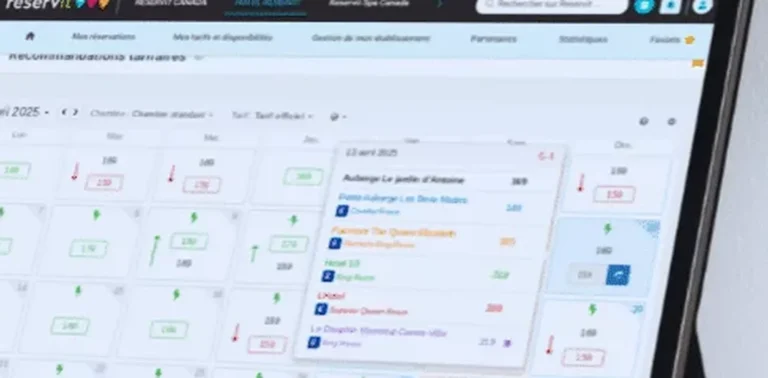
In a highly competitive sector like hospitality, strategic decisions related to revenue management can make all the difference. Revenue Management System (RMS) software is designed to help hoteliers maximize revenue by optimizing pricing and occupancy.

In a highly competitive sector like hospitality, strategic decisions related to revenue management can make all the difference. Revenue Management System (RMS) software is designed to help hoteliers maximize revenue by optimizing pricing and occupancy. However, like any technological tool, their use comes with both advantages and disadvantages.
RMS software analyzes real-time hotel data (rates, occupancy levels, seasonality, competition) and suggests dynamic pricing strategies to maximize revenue. According to a study by STR, hotels using an RMS experience an average increase of 7% to 10% in annual revenue.
RMS systems leverage advanced algorithms to forecast future demand trends. This enables hoteliers to anticipate high and low demand periods and adjust their strategies accordingly.
Automating rate management eliminates the need for hoteliers to spend hours manually analyzing data. This allows teams to focus on higher-value activities, such as customer service.
RMS systems reduce the risk of human error in pricing decisions and ensure a consistent and market-adapted strategy.
Reservit’s RMS software stands out for its quick and intuitive onboarding, making it accessible to all hoteliers. Its design provides a high-performance entry-level solution capable of meeting an establishment’s needs right from implementation. Additionally, its highly competitive pricing makes it an advantageous option for quickly maximizing revenue.
While Reservit’s RMS is highly competitive, certain RMS solutions on the market represent a significant investment, especially for smaller establishments. Costs related to acquisition, monthly subscriptions, and training can make these tools seem prohibitive for some businesses.
Implementing an RMS requires a training phase for the team. Without a solid understanding of the software’s features, the tool risks being underutilized.
Technical failures or poor integration with other systems can directly impact daily operations and the profitability of the establishment.
Some hotels may end up adopting strategies similar to their competitors, which can reduce their differentiation in the market.
RMS software relies on high-quality data to function effectively. Incomplete or inaccurate information can distort analysis and recommendations.
Using an RMS represents a major evolution in hotel management, offering significant potential to improve profitability and optimize operations. With Reservit’s RMS software, hoteliers benefit from a powerful, cost-effective, and user-friendly solution, eliminating many of the common barriers associated with such tools.
In conclusion, a well-integrated and properly used RMS can become a strategic asset for any hotel aiming to stay competitive in an ever-evolving market.
Canadian hoteliers looking to adapt to new market demands can benefit from innovative solutions like Reservit. We offer a powerful revenue management tool designed to boost profitability.
Sources for this Article

Article Revenue management
11 min read

Article Revenue management
4 min read

Article Revenue management
13 min read